
Thinking About Starting a Box Truck Business?
Read this before you spend thousands on a box truck, sprinter van, insurance policy, MC authority, load boards, and fuel. The opportunity is real — but the risk is usually bigger than new operators expect.
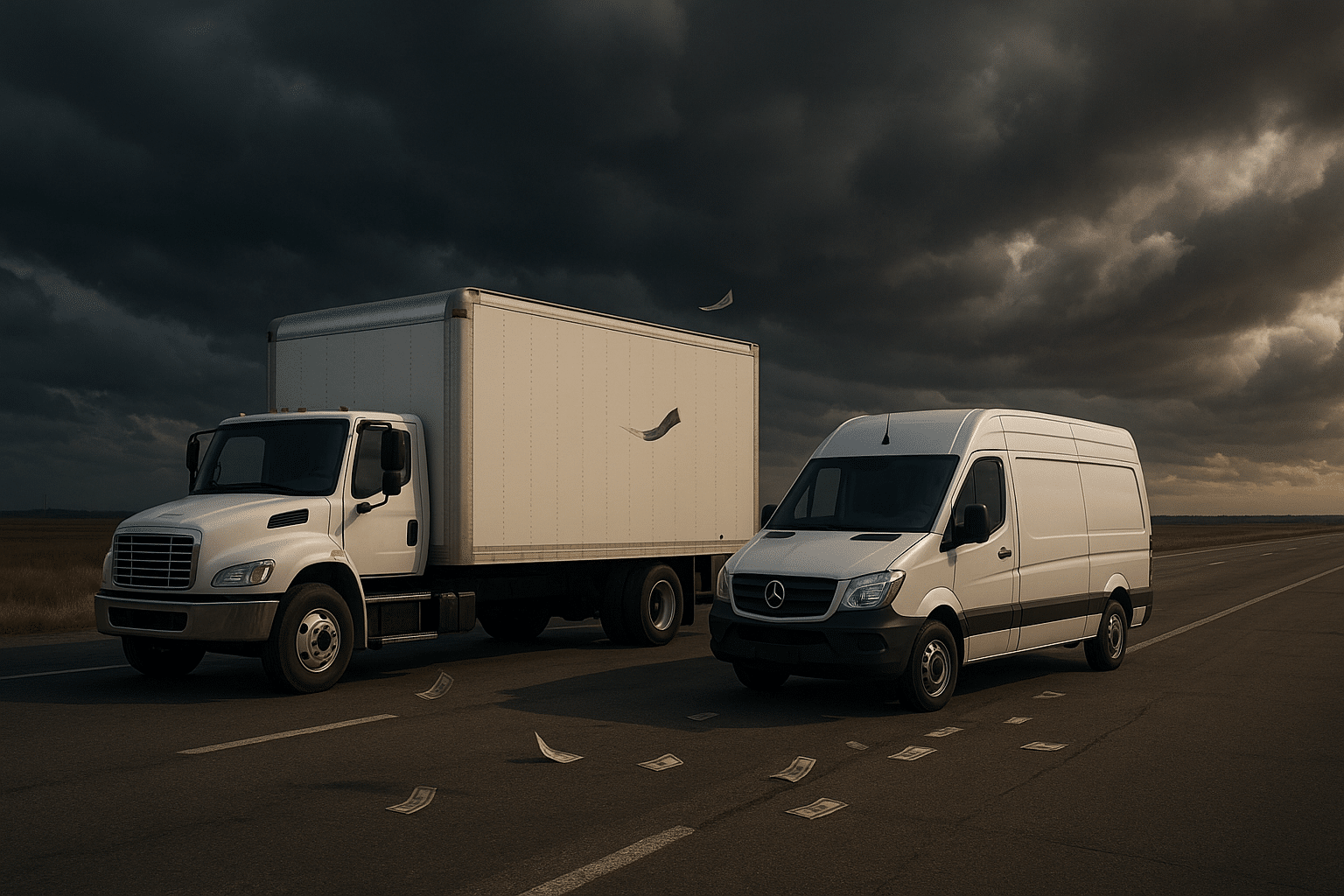
Typical Startup Reality
| Used Box Truck | $25K–$80K+ |
| Insurance Deposit | $3K–$8K+ |
| Authority & Compliance | $500–$2K+ |
| Fuel & Operating Cash | $5K–$15K+ |
Before You Buy Equipment
Box Truck vs Sprinter Van vs Class A CDL Truck
Most new operators compare equipment by purchase price only. That is the wrong way to look at it. The better question is: which equipment gives you the most freight access, revenue opportunity, and long-term scalability?
| Category | Sprinter Van | Box Truck | Class A CDL Truck |
|---|---|---|---|
| Freight Availability | Low and highly competitive | Moderate but lane-dependent | Highest access to broker and shipper freight |
| Startup Cost | Lower equipment cost | Moderate to high | High, but more scalable |
| Load Board Access | Limited | Limited compared to 53-foot freight | Strongest load board availability |
| Revenue Ceiling | Lower | Moderate | Higher |
| Best For | Local courier or final-mile work | Local/regional dedicated freight | OTR, regional, contract, and broker freight |
The Part Influencers Skip
What Most YouTube Videos Don’t Tell You
The online hype usually shows revenue screenshots, not net profit. Real trucking profit depends on freight access, deadhead control, insurance cost, maintenance planning, broker relationships, and cash flow.
Deadhead Miles
Many new box truck and sprinter van operators drive long distances empty between loads. Empty miles still cost fuel, time, maintenance, and insurance.
Insurance Shock
Commercial auto insurance can become one of the largest fixed expenses, especially for new authorities with little operating history.
Low Freight Leverage
Brokers and shippers often prioritize full truckload equipment. Smaller equipment can leave you fighting for fewer loads with more competition.
Real Monthly Burn Rate
Box Truck Business Expenses Add Up Fast
A profitable trucking business is not built on gross revenue. It is built on what is left after insurance, fuel, maintenance, tires, dispatch, factoring, compliance, and downtime.
| Expense | Typical Range | Why It Matters |
|---|---|---|
| Insurance | $1,500–$3,500+/month | Often required before the truck earns a dollar. |
| Fuel | $1,500–$4,000+/month | Depends heavily on miles, deadhead, weight, and routing. |
| Maintenance | $500–$1,500+/month | Older box trucks can become expensive quickly. |
| Tires | $150–$600+/month reserve | One tire event can wipe out profit from multiple loads. |
| ELD / Compliance | $50–$150+/month | Required for many interstate commercial operations. |
| Dispatch / Load Boards | $250–$1,000+/month | Finding freight is a cost, whether you pay in time or fees. |
| Factoring | 1.5%–5% of invoice | Improves cash flow but reduces margin. |
Amazon Relay Reality Check
Is Amazon Relay Still Worth It for Box Trucks?
Amazon Relay can be part of a strategy, but it should not be the entire business plan. If your whole operation depends on one platform, your revenue is exposed to bidding pressure, account performance, lane availability, and rating issues.
Potential Pros
- Recognizable freight platform
- Possible access to consistent lanes
- Useful for some operators with strong planning
- Can help newer carriers learn routing discipline
Major Cons
- Heavy competition from other carriers
- Margins can be thin after fuel and deadhead
- Account performance issues can hurt access
- Not a replacement for direct freight relationships
Failure Points
Why New Box Truck Businesses Struggle
Most failures are not caused by one bad load. They are caused by stacked pressure: high fixed costs, low freight leverage, poor cash reserves, slow-paying customers, maintenance surprises, and unrealistic revenue expectations.
Insurance, authority, and cash flow shock
New owners often underestimate deposits, compliance setup, load board costs, and the delay between booking freight and actually getting paid.
Freight consistency becomes the problem
The truck may move, but not always at profitable rates. Deadhead, waiting time, and short-haul inefficiency can quietly drain the account.
Maintenance and renewal pressure hits
Repairs, tires, insurance renewals, and equipment debt become harder to manage if the business never built a real profit cushion.
Note: Results vary by market, equipment, capitalization, freight relationships, driving habits, and business management.
Better Options
Alternatives Before You Buy a Box Truck
Before financing equipment, look at paths that may give you more freight access, better training, and less financial exposure.
Get Your Class A CDL
A CDL opens access to larger equipment, more lanes, and more opportunities with carriers, brokers, and dedicated freight.
Lease-On With a Carrier
Leasing onto an established authority may reduce some startup complexity while you learn operations, safety, dispatch, and paperwork.
Drive First, Buy Later
Working as a company driver first can help you learn freight lanes, brokers, paperwork, compliance, and what equipment actually earns.
Build Freight Relationships
Direct relationships matter. A truck without freight access is not a business — it is an expensive asset waiting for work.
Freight Girlz Advice
When a Box Truck Business Can Make Sense
This page is not saying every box truck business is doomed. It is saying the model works best when you have a real plan before you buy the truck.
Dedicated Freight
If you already have a shipper, contract, or repeat lane, the business has a stronger foundation.
Strong Cash Reserve
Cash gives you room to survive slow weeks, delayed payments, repairs, deposits, and insurance pressure.
Clear Lane Strategy
Knowing where freight comes from and where reloads are available is more important than simply owning equipment.
Do Not Buy a Truck Before You Understand the Freight
Freight Girlz helps owner-operators and carriers think through freight access, dispatch strategy, equipment fit, and lane planning before they burn cash on the wrong setup.
FAQ
Box Truck Business FAQs
Is a box truck business profitable?
It can be profitable, but only when freight access, insurance costs, fuel, maintenance, deadhead, and cash flow are managed correctly. Many new owners focus on gross revenue instead of net profit.
How much does it cost to start a box truck business?
Startup costs can range from tens of thousands of dollars depending on equipment, insurance deposits, compliance setup, working capital, and whether the truck is financed or purchased cash.
Can I start a box truck business without a CDL?
Some box trucks can be operated without a CDL depending on weight rating, state rules, and operation type. However, non-CDL does not mean non-commercial. Insurance, authority, safety, and compliance still matter.
Is Amazon Relay good for new box truck owners?
Amazon Relay may work for some operators, but it should not be the only freight source. Competition, performance scores, lane availability, and rates can make margins tight.
What is the biggest expense in a box truck business?
Insurance, fuel, equipment payments, and maintenance are usually the biggest expenses. The most dangerous expense is often deadhead because it quietly burns money without producing revenue.
Is a sprinter van business easier than a box truck business?
A sprinter van can have lower startup costs, but freight availability and revenue potential are often more limited. It is not automatically easier just because the vehicle is smaller.
Should I get a CDL instead of buying a box truck?
For many people, getting a Class A CDL first creates more opportunity and less guesswork. A CDL gives access to larger freight markets and more carrier opportunities.
Does Freight Girlz dispatch box trucks or sprinter vans?
Freight Girlz primarily focuses on full-size trucking equipment. If you are unsure whether your equipment is a fit, contact Freight Girlz before making a purchase or onboarding decision.