Non‑Domiciled CDL Drivers in 2026

Market Outlook · 2026

The Non-Domiciled CDL Shake-Up & Spot Market Rates in 2026

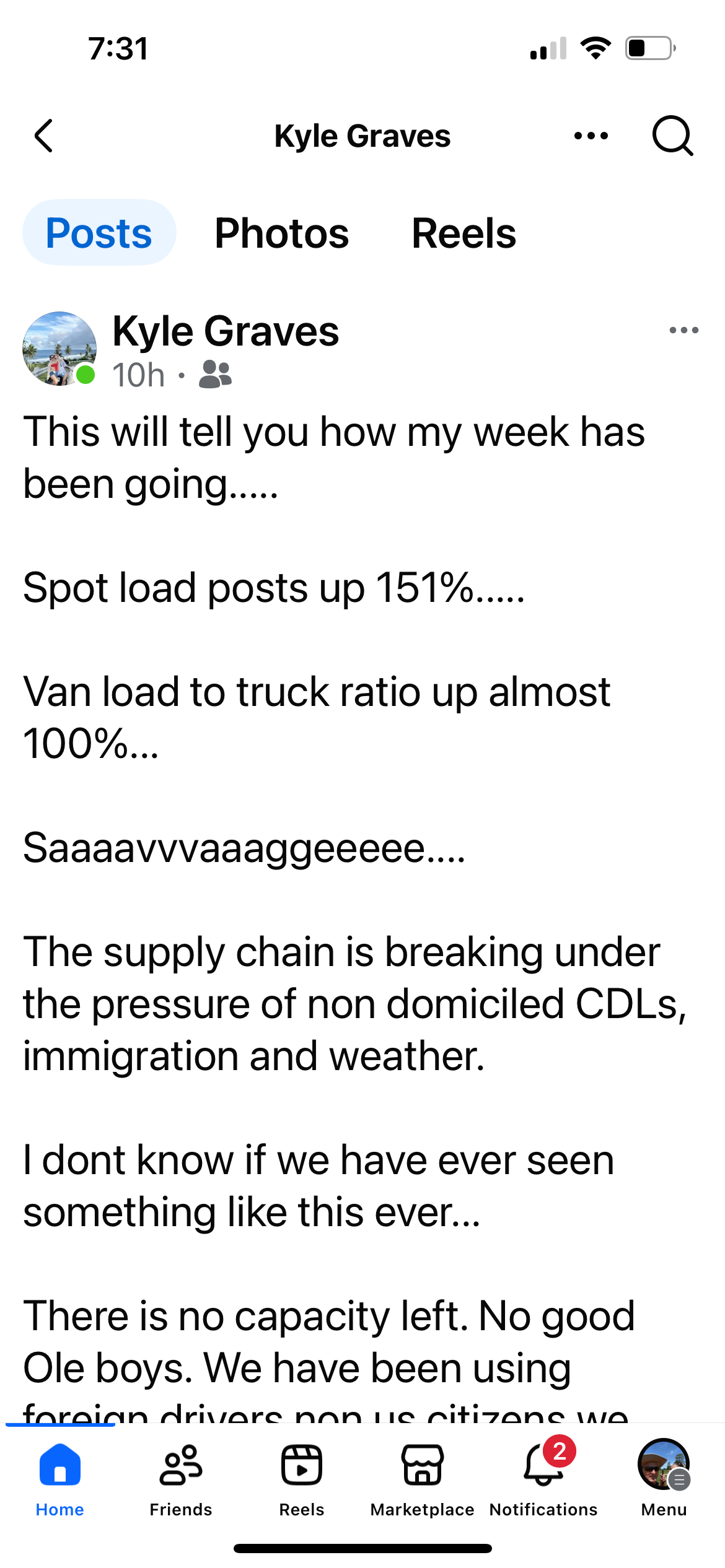
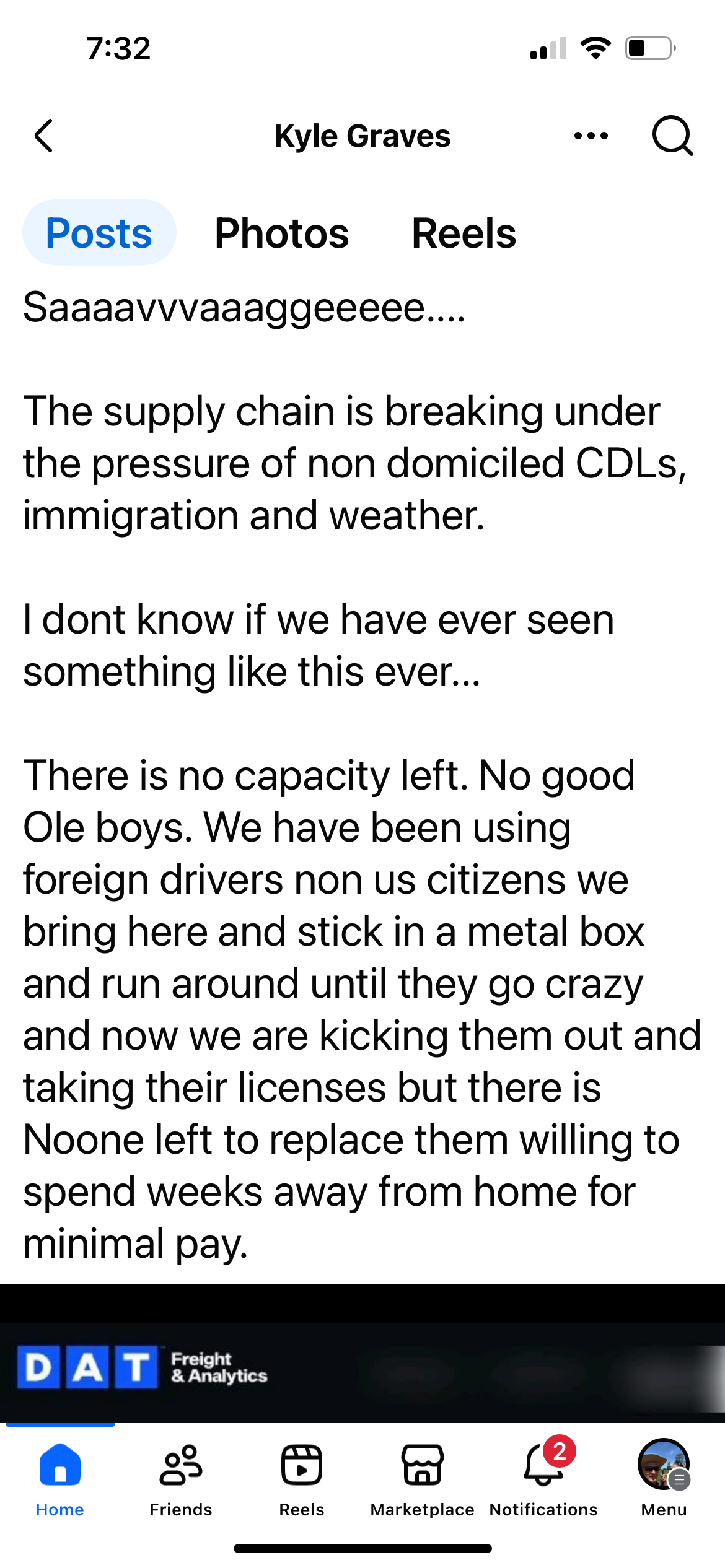
FMCSA’s non-domiciled CDL rule is reshaping the U.S. driver pool. As licenses get harder to obtain and renew, capacity shrinks – and the truckload spot market reacts first.

In this guide, we unpack what the rule actually does, how many drivers it touches, and how those changes can push spot rates higher across van, reefer, flatbed and more through 2026.

📊 Data-Driven Outlook
🚛 Carriers & Owner-Ops
📦 Shippers & Brokers
Primary focus: Non-domiciled CDL rule Time horizon: Spot market rates through 2026 Audience: Carriers · Owner-operators · Shippers

1. What Is a Non-Domiciled CDL?

A non-domiciled commercial driver’s license (CDL) is a CDL issued to a driver who is legally present in the United States and authorized to work, but who does not meet the traditional definition of being “domiciled” in a specific U.S. state as a permanent resident.

In practice, a non-domiciled CDL holder typically:

  • Holds valid immigration status or work authorization
  • Passes the same written and skills tests as any other CDL holder
  • May not have a long-term, permanent residence in the state that issued the CDL

These drivers are not an edge case. For many fleets, especially long-haul and regional carriers, non-domiciled CDL holders have been an essential way to keep trucks moving and commitments covered.

📌 Why it matters

The non-domiciled CDL category represents a meaningful slice of the available driver pool. When rules tighten around that group, the ripple effect shows up in driver supply, capacity, and ultimately price per mile.

2. The FMCSA Non-Domiciled CDL Rule – What Actually Changed?

In 2025, the Federal Motor Carrier Safety Administration (FMCSA) moved to “restore integrity” to CDL issuance by tightening eligibility for non-domiciled CDL holders. The idea is to make sure every CDL is backed by clearly verified immigration and residency documentation.

In practical terms, the rule does things like:

  • Limits who can obtain or renew a non-domiciled CDL. Many drivers must now prove specific, current work authorization or qualifying visa types to keep their CDL.
  • Requires in-person renewals with updated verification. Renewals that previously felt routine now involve more documentation and closer scrutiny.
  • Reopens historic issuance practices. Some existing non-domiciled CDLs, especially those tied to older state processes, may be flagged as non-compliant and subject to cancellation.

On paper, this is about standardizing and tightening CDL issuance. On the ground, it introduces real friction into a labor pool that many fleets rely on daily.

4. How Many Non-Domiciled CDL Drivers Are We Talking About?

Estimates differ, but multiple public sources point to hundreds of thousands of CDL records tied to non-domiciled drivers nationwide. That’s a large enough number to move the needle on capacity.

Several patterns matter more than the headline total:

  • They’re not evenly spread. Non-domiciled drivers are concentrated in specific states, carriers, and lanes – especially long-haul, cross-border, and harder-to-fill freight.
  • Certain fleets are heavily exposed. Carriers that leaned on this labor pool to solve their driver shortage problems may see outsized disruption as renewals tighten.
  • Exits won’t happen all at once. Renewals happen on a cycle, and enforcement will roll through over time. But the direction is one-way: it points to a smaller pool of eligible non-domiciled drivers in the future.

A realistic view is that tens of thousands of active drivers could phase out of the market over the next 1–3 years as licenses expire, renewals are denied, or drivers shift careers.

5. Capacity & Driver Supply: Why the Rule Hits So Hard

5.1 A Driver Shortage Meets a Regulatory Pullback

The industry didn’t start from surplus. Even before this rule, fleets were wrestling with “driver shortage” headlines: retirements, lifestyle concerns, and competing jobs have all made recruiting harder.

Now, add a policy that tightens eligibility for a large subset of working drivers. Even if only a portion of non-domiciled CDL holders exit, the net effect is to pull capacity out of a system that already had cracks.

That shows up as:

  • More aggressive competition for remaining qualified drivers
  • Higher wages and bonuses to attract U.S. citizen and permanent-resident drivers
  • Less flexibility to say yes to marginal or last-minute loads

5.2 Regional & Segment Sensitivities

The pain won’t be evenly distributed. Some freight will feel this much more than others:

  • Border and cross-border lanes. Freight near Canada and Mexico, or tied to cross-border networks, may see sharper capacity drops as licensing and visa issues intersect.
  • Long-haul OTR freight. “Hard miles” that require extended time away from home often rely more heavily on non-domiciled drivers.
  • Lower-margin or difficult freight. Loads that were already tough to cover at current rates may struggle even more to attract trucks.

For brokers and shippers, that means some lanes may feel only mildly tighter, while others may start behaving more like 2021—when trucks were hard to find at any price.

🚦 Capacity in plain English

Capacity is just the industry’s ability to put safe, compliant trucks under loads at a given price. When you cut driver supply without cutting freight demand, you don’t just lose trucks – you support higher price per mile, especially in the spot market where rates move fastest.

6. Spot Market Rate Outlook for 2026

To understand how this rule will influence spot rates, it helps to think in two layers: what analysts expected before the non-domiciled CDL issue was front and center, and what changes once you factor it in.

6.1 Baseline: Before the Non-Domiciled CDL Shock

Prior to this regulatory shift, many forecasts were calling for modest spot rate growth in 2026: a slow tightening after softer conditions in 2024–2025, driven mostly by gradual demand recovery.

In that world, you might have seen:

  • Dry van spot rates up modestly year-over-year
  • Reefer showing slightly stronger growth in food and high-value lanes
  • Flatbed/step-deck moving with construction, industrial, and energy cycles

6.2 Policy-Adjusted: What Happens When Supply Shrinks

When you layer in the non-domiciled CDL rule, the picture shifts. If driver supply shrinks while freight demand holds steady or grows, spot rates tend to rise faster than contract rates.

Why spot moves more:

  • Contract freight gets first call on available trucks; spot freight competes for what’s left.
  • When capacity tightens, carriers can be more selective on spot and demand higher rates.
  • Brokers and shippers that lean heavily on spot loads feel the squeeze earliest.
Equipment Type Baseline 2026 Outlook (No Rule Impact) Policy-Adjusted Outlook (Non-Domiciled CDL Tightening)
Dry Van 0–4% average spot rate increase 3–10% average increase; double-digit potential in tight lanes
Reefer 2–6% increase in key food/retail lanes 5–12% increase; sharper peaks in seasonal surges
Flatbed / Step-Deck Cyclical; tied to construction & manufacturing 5–15% in active regions if project freight holds up
Power-Only Stable to modest growth Upward pressure in regions where trailer pools rely heavily on non-domiciled drivers for repositioning

7. Three Realistic Spot Market Scenarios for 2026

Because the rule’s final shape, court outcomes, and economic backdrop are still evolving, the clearest way to think about 2026 is through scenarios.

Scenario 1

Moderate Tightening (Most Likely)

  • Driver exits spread over 18–24 months
  • Courts allow most of the rule to stand
  • Freight demand grows slowly but steadily

Spot rate impact: average increases in the 5–12% range versus 2025, with higher moves in lanes that were already tight or rely heavily on non-domiciled drivers.

🔥 Scenario 2

Aggressive Capacity Loss

  • Enforcement accelerates, stays are limited
  • Large share of non-domiciled drivers exit quickly
  • Domestic recruiting can’t fill gaps in time

Spot rate impact: 10–20% increases are possible in certain regions or equipment types, especially long-haul van and reefer. Expect sharper spikes during peak seasons and weather disruptions.

🌧️ Scenario 3

Delayed Enforcement & Soft Demand

  • Court challenges slow implementation
  • Freight demand remains soft in key sectors
  • Carriers adapt hiring and operations faster

Spot rate impact: 0–5% average increases, very uneven by lane. Some markets stay flat or even soften if volume disappoints.

Today, Scenario 1 – a moderate but meaningful tightening – looks like the best base case. But carriers and shippers should stress-test budgets and strategies against the hotter and softer scenarios too.

8. Four Variables That Will Decide How 2026 Really Feels

The non-domiciled CDL rule is big, but it’s not the only driver of rates. Four other forces will shape how 2026 actually looks on your P&L.

8.1 Macro-Economic Demand

Freight follows the economy. If manufacturing, housing, imports, and consumer demand are healthy, truckload volume rises and any reduction in driver supply bites harder. If there’s a slowdown or recession, the rule may simply soak up “excess” capacity instead of driving big rate spikes.

8.2 Pace and Scope of Enforcement

The difference between a 5% and 20% move in spot rates can come down to timing. If states move slowly and courts pause parts of the rule, the industry gets time to adapt. If enforcement is fast and sweeping, the adjustment gets compressed into a shorter window – and prices move more violently.

8.3 Carrier Strategy & Labor Costs

Carriers aren’t just reacting; they’re making moves:

  • Raising wages and incentives to attract domestic drivers
  • Partnering with CDL schools and training pipelines
  • Rebalancing lane mix toward higher-yield freight
  • Using technology and smarter dispatching to improve utilization

Those responses can soften the capacity hit – but they also raise cost per mile, which supports higher rate targets in contract and spot negotiations.

8.4 Shipper Behavior & Mode Shifts

Shippers get a vote too. Faced with tighter truckload capacity, many will:

  • Shift more freight into structured contract agreements
  • Move some volume to intermodal, where service and transit times allow
  • Change order cycles to reduce exposure to last-minute spot loads

That behavior can reduce volatility, but it also rewards carriers and 3PLs with stable fleets, strong compliance, and the ability to show up even when the market is tight.

9. How Carriers, Owner-Operators & Shippers Can Prepare

9.1 For Carriers & Fleets

Whether you run five trucks or five hundred, the non-domiciled CDL issue is a signal to get proactive about both compliance and capacity.

  • Audit your roster. Know exactly how many of your drivers hold non-domiciled CDLs and what their renewal timelines look like.
  • Invest in domestic recruiting. Build pipelines through schools, referrals, and veteran programs so you’re not scrambling later.
  • Adjust your pricing strategy. If your labor and compliance costs are rising, your contract rates must match the new cost structure.
  • Protect your safety & compliance profile. In tighter markets, brokers and shippers favor carriers that are reliable and low-risk.

If you partner with a dispatching company, make sure they understand these dynamics and are actively positioning your trucks where rates and relationships are strongest.

9.2 For Owner-Operators

Owner-operators live closest to spot market volatility – which means they also have the most to gain if they play tight markets intelligently.

  • Dial in your cost per mile. You need to know the exact floor rate where a load stops making sense.
  • Gravitate toward tighter markets. When possible, position your truck in regions and lanes where capacity is expected to shrink the most.
  • Prioritize relationships over random loads. Brokers and shippers that trust you will pay more consistently when trucks are scarce.

Working with a smart truck dispatch service that monitors lane data, broker quality, and regulatory changes can help you catch the upside of this shift instead of getting stuck on low-paying freight as the market turns.

9.3 For Shippers & Freight Buyers

Shippers that start planning now will be in a stronger position if spot rates climb in 2026.

  • Rebalance contract vs. spot. If you’ve leaned heavily on the spot market during softer years, consider pulling more volume into contracts with clear guardrails.
  • Partner with asset-based capacity. Carriers and 3PLs that truly control trucks – not just paper capacity – will be critical when the market tightens.
  • Budget for volatility. Build room in your 2026 transportation budget for potential surcharges or seasonal spot spikes.

The shippers who come out ahead in tight markets are usually the ones who treat carriers as strategic partners instead of purely transactional vendors.

10. FAQ: Non-Domiciled CDLs & Spot Market Rates

Will the non-domiciled CDL rule definitely raise spot rates in 2026?

It is very likely that the rule will support higher spot rates, but the exact size of the increase depends on enforcement timing, driver attrition, and the broader economy. Slow enforcement plus weak demand might only yield modest increases; rapid enforcement in a growing freight environment could produce much sharper jumps.

Which equipment types are likely to feel the impact first?

Long-haul dry van and reefer lanes – especially in regions where fleets lean heavily on immigrant or non-domiciled drivers – are strong candidates. Flatbed and step-deck in active construction or industrial regions can also tighten quickly if project freight remains strong.

Could a recession or freight downturn offset the impact of the rule?

Yes. If freight volumes fall significantly, the capacity reduction from the rule might simply absorb excess trucks instead of pushing rates up. That’s why it’s important to watch both regulatory news and freight demand indicators when planning 2026 budgets.

How should a small fleet or owner-operator adjust their strategy?

Focus on the fundamentals: know your numbers, prioritize freight that pays fairly, and keep your compliance profile clean. As capacity tightens, “good” carriers become more valuable, and brokers and shippers are willing to pay more to keep them on their lanes.

What role can a dispatch service play in this environment?

A strong dispatch partner can help you:

  • Spot lanes where capacity is tightening and rates are climbing
  • Filter out risky brokers and low-paying freight
  • Negotiate stronger spot rates when market leverage is on your side
  • Keep your paperwork and back office tight so you’re easy to work with

In a market where both regulations and rates are moving targets, having a team watching the data daily can be the difference between barely surviving and truly thriving.